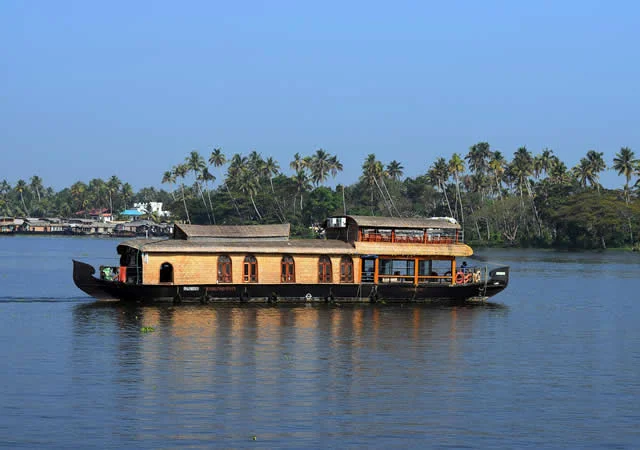
Kumarakom sits quietly along the eastern shore of Vembanad Lake, one of India’s largest waterbodies. This small village in Kerala has built a reputation as a peaceful retreat where travellers come to unwind on houseboats, watch birds, and experience the rhythm of backwater life. It’s not a bustling town or a beach destination. Instead, Kumarakom offers something slower: narrow canals threading through coconut groves, the occasional splash of a kingfisher, and evenings that settle in with the softest of lake breezes.
Drift slowly through the calm waters of Kumarakom Backwaters, a peaceful network of canals and lagoons seamlessly merging into the vast Vembanad Lake.
The appeal here is straightforward. You get access to Kerala’s famous backwaters without the crowds of some other spots, along with quality resorts and authentic village encounters. Whether you’re planning a houseboat cruise, a birdwatching morning, or simply a few days of doing very little, Kumarakom makes it easy.
Understanding Kumarakom
Despite its calm setting, getting here is simple. Kumarakom is located about 14km (9 miles) from Kottayam town in central Kerala. It’s close enough to major transport links but far enough from highways and noise to feel like a proper escape. The village spreads across a cluster of small islands and peninsulas, all connected by waterways and narrow roads.
Houseboat Cruises
Houseboats, or kettuvallams, are the most popular way to experience Kumarakom. These traditional rice barges have been converted into floating accommodations with bedrooms, kitchens, and open decks. You can book a day cruise or an overnight stay, depending on how much time you have.
The journey itself is unhurried. Houseboats glide through narrow canals lined with palms, past small villages, paddy fields, and the occasional temple. You’ll see locals washing clothes by the water, children waving from the banks, and fishermen casting nets. Meals are cooked onboard, usually Kerala-style fish curry, rice, and vegetables, fresh and simple.
Most houseboats dock by evening due to local regulations, so don’t expect to cruise all night. But that’s part of the charm. You spend the evening moored by a quiet canal, listening to the water lap against the hull.
Kumarakom Bird Sanctuary
For nature lovers, the Kumarakom Bird Sanctuary is a major draw spread across 14 acres, this sanctuary is home to water birds like herons, egrets, kingfishers, and migratory species that flock here in season.
If you’re even mildly interested in birds, this sanctuary is worth an early start. The best time to visit is between 6am and 9am when the light is soft and the birds are active. The sanctuary consists of wetlands, mangroves, and pathways that wind through dense greenery.
Common residents include herons, egrets, darters, cormorants, and kingfishers. During the migratory season, roughly November to February, you might spot Siberian cranes, teals, and other long-distance travellers. Even if you’re not a serious birdwatcher, the walk itself is pleasant, quiet, and cool in the mornings.
Entry is inexpensive, and local guides are available if you want help identifying species. Binoculars are useful but not essential.
Village Walks & Canoe Rides
Kumarakom’s villages offer a different pace. You can arrange guided walks through narrow lanes where you’ll see coir being twisted from coconut fibre, toddy tappers climbing palms with impressive ease, and small farms growing tapioca, bananas, and vegetables.
Canoe rides take you deeper into the backwaters than houseboats can reach. These smaller, quieter boats slip through thin canals overhung with greenery. It’s a more intimate experience, closer to the water and the life around it. Some resorts and local operators organise these trips, often in the late afternoon when the heat eases.
Backwater Resorts & Ayurveda
Kumarakom has a strong selection of accommodations, from heritage properties to contemporary lakeside resorts. Many places offer direct water views, private pools, and well-maintained gardens. The standard is generally high, and even mid-range options tend to be comfortable and thoughtfully designed.
Ayurveda is a big draw. Several resorts have in-house wellness centres offering traditional massages, detox programmes, and treatments based on individual body types. If you’re new to Ayurveda, most places will do a consultation first and tailor the therapies accordingly. Even a single massage session can be deeply relaxing after a few days of travel.
Sunset Points
Vembanad Lake opens up into a wide expanse, and sunsets here can be spectacular. The sky turns shades of orange and pink, reflecting off the still water. Most resorts have viewing areas, but you can also catch the sunset from a houseboat deck or along the lake’s edge.
It’s a simple pleasure, but one that travellers consistently mention. The light, the scale of the lake, and the quiet all combine into something memorable.
What Makes it Special
Vembanad Lake is the centrepiece. This sprawling waterbody stretches across several districts, and Kumarakom occupies one of its most scenic stretches. The lake feeds into a network of canals, lagoons, and rice paddies that create the classic Kerala backwater landscape.
What sets Kumarakom apart is the balance. You’ll find luxury resorts with infinity pools and Ayurvedic spas, but you’ll also see village homes, fishing nets drying in the sun, and farmers tending small plots. It’s a place where high-end tourism and traditional life exist side by side without feeling forced.
The Kumarakom Bird Sanctuary adds another layer. Spread over 14 acres, this reserve draws birdwatchers from across the world, especially during the migratory season when species from Siberia and other distant regions arrive.
Seasonal Highlights
Kumarakom’s climate follows Kerala’s typical monsoon pattern, and each season brings a different mood.
- Monsoon (June to September): The rains turn everything a deep, lush green. The air cools down, and the backwaters swell. It’s beautiful, but houseboat activity slows, and some outdoor experiences are limited. If you like rain and don’t mind staying indoors occasionally, it’s a peaceful time to visit.
- Post-monsoon (October to February): This is peak season, and for good reason. The weather is pleasant, humidity drops, and the backwaters are full and calm. Migratory birds arrive, houseboats are busy, and outdoor activities are at their best. Book ahead if you’re travelling during this window.
- Summer (March to May): Temperatures rise, and the humidity builds, but the lake breeze takes the edge off. It’s quieter, with fewer tourists, and rates drop. If you can handle the warmth, it’s a good time for a budget-friendly visit.
Local Cuisine
Food in Kumarakom leans heavily on what the backwaters provide. Fresh fish, prawns, and crab feature prominently, often cooked with coconut, tamarind, and local spices. Karimeen pollichathu, pearl spot fish marinated and grilled in banana leaves, is a must-try. It’s delicate, smoky, and packed with flavour.
Most houseboats serve traditional Kerala meals: rice, sambar, avial, thoran, and fish curry. Resorts often offer broader menus, but the local dishes are usually the highlight. Tapioca (kappa) with fish curry is another staple, simple but satisfying.
If you’re vegetarian, Kerala sadya is the gold standard. This elaborate meal served on a banana leaf includes rice, sambar, rasam, and a dozen or more vegetable dishes. Some resorts offer sadya on request, especially during festivals.
How to Reach
Kumarakom is well-connected by road to Kottayam, which sits on National Highway 183. From Kottayam, it’s about 14km (9 miles) and takes roughly 30 minutes. Taxis and autorickshaws are available, and many resorts arrange pickups.
If you’re driving from Kochi, take NH 66 towards Alappuzha, then branch off towards Kottayam and Kumarakom. The drive is around 80km (50 miles) and takes about two hours.
Kottayam Railway Station is the nearest major railhead, with trains connecting to Thiruvananthapuram, Kochi, Bangalore, Chennai, and other cities. From the station, taxis and autorickshaws can take you to Kumarakom.
Cochin International Airport is approximately 80km (50 miles) from Kumarakom. Taxis and pre-paid cabs are available at the airport, and the journey takes 90 minutes to two hours depending on traffic.
Nearby Attractions
- Pathiramanal Island: This small island in Vembanad Lake is accessible only by boat. It’s a quiet spot with walking paths, thick vegetation, and plenty of birdlife. The name means “sands of midnight,” and while the story behind it is debated, the setting is undeniably peaceful. Boats leave from Kumarakom, and the trip takes about 20 minutes.
- Vaikom: About 20km (12 miles) from Kumarakom, Vaikom is known for the Vaikom Mahadeva Temple, one of Kerala’s oldest Shiva temples. The town also played a role in India’s independence movement, and there’s a modest museum covering that history. It’s worth a half-day visit if you’re interested in temple architecture or local heritage.
- Aruvikkuzhi Waterfalls: Located around 18km (11 miles) from Kottayam, this waterfall is best visited during or just after the monsoon when the flow is strong. It’s a scenic spot surrounded by rubber plantations, and there’s a small park with pathways. Not a major attraction, but pleasant if you’re in the area.
- Kottayam Town: Kottayam is a short drive away and offers markets, churches, bookshops, and local eateries. The town is known for its literary tradition and has several old Syrian Christian churches worth visiting. It’s a good place to spend a few hours if you want a change from the backwaters.
Travel Tips
- Book houseboats early if you’re visiting between October and February. Peak season fills up quickly, and last-minute options may be limited or overpriced.
- Pack light cotton clothes, sunscreen, a hat, and mosquito repellent. Evenings can bring mosquitoes, especially near the water.
- Houseboats dock by evening due to local rules, so plan your itinerary accordingly. You won’t cruise through the night, but moored evenings have their own appeal.
- Mornings are best for birdwatching and photography. The light is softer, and wildlife is more active.
- Carry some cash. While most resorts accept cards, smaller operators, village shops, and local guides may prefer cash.
Responsible Tourism
- Kumarakom’s beauty depends on its environment staying clean and healthy. Don’t litter near canals, lakes, or walking paths. If you see trash, consider picking it up or notifying your resort.
- Respect local culture and village privacy. Not every moment needs a photograph, especially in people’s homes or during religious activities. Ask permission before taking pictures of individuals.
- When possible, choose eco-friendly properties and operators. Some resorts use solar power, rainwater harvesting, and waste management systems. Supporting these businesses encourages more sustainable practices across the region.
A Place to Pause
Kumarakom isn’t about ticking off a long list of sights. It’s about slowing down, watching the water, listening to birds you can’t quite see, and letting a few days pass without urgency. The backwaters here feel more intimate than some of Kerala’s busier spots, and the village atmosphere adds authenticity that bigger destinations sometimes lack.
Whether you’re here for a houseboat adventure, a birding expedition, a honeymoon, or simply a family break, Kumarakom offers space to breathe. It’s Kerala at its gentlest, a place where doing less often means experiencing more.