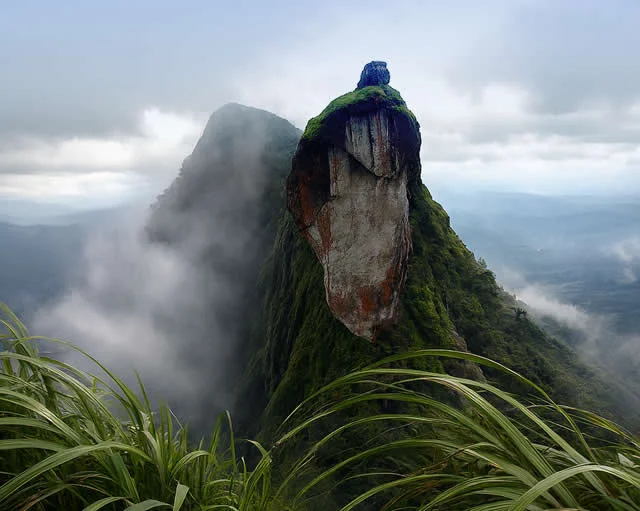
Illickal Kallu stands out among Kerala’s highland destinations for its dramatic rock formations and sweeping views across the Western Ghats. Located in Kottayam district, this mountain viewpoint has gained popularity in recent years with trekkers, photographers, and road trippers drawn to its distinctive landscape and accessible location.
The hill is made up of three distinct peaks, each with a unique character. One is called Kuda Kallu (umbrella-shaped rock), resembling a mushroom; another is known as Koonu Kallu (hunchback rock) due to its curved form; and the third is the iconic Illickal Kallu itself, a monolithic rock where part of the peak has naturally broken off.
Ancient bridges add to the dramatic landscape. Names like Narakapalam (‘bridge to hell’) and Swargavathil (‘door to heaven’) evoke mystery and wonder.
The site centres on three major rock structures that rise above the surrounding hills, offering panoramic views of valleys, mist-covered peaks, and distant villages. The combination of unusual geology, high-altitude scenery, and a relatively short trek makes Illickal Kallu an appealing stop for anyone exploring Kerala’s hill country.
Understanding Illickal Kallu
Illickal Kallu is situated near Moonnilavu and Teekoy villages in Kottayam district, at an elevation of around 1,100m (3,600 feet). It’s positioned between the more well-known hill stations of Vagamon and Erattupetta, making it easy to combine with visits to either destination.
The viewpoint is accessible from several towns: roughly 57km (35 miles) from Kottayam, 23km (14 miles) from Erattupetta, 28km (17 miles) from Pala, and about 21km (13 miles) from Vagamon. The road winds through tea estates, rubber plantations, and forested areas before reaching the lower parking area.
The high-altitude setting provides sweeping views across multiple valleys and ranges of the Western Ghats. On clear days, you can see far into the distance, with layers of hills fading into the horizon. The elevation also ensures a pleasantly cool climate throughout the year, even during Kerala’s hotter months.
Local legends add a layer of cultural interest. Stories speak of mythical figures and ancient travellers, though the real fascination lies in the natural forces that shaped these distinctive rock formations over thousands of years.
The Rock Formations
The rock structures at Illickal Kallu have been shaped by erosion into dramatic forms. The main rock rises like a natural tower, with weathered surfaces that catch the light in different ways throughout the day. Kuda Kallu resembles an umbrella or mushroom shape, while Narkappalam is a narrow formation that some brave souls walk across, though it’s not officially encouraged.
These formations are photogenic from multiple angles. Sunrise and sunset bring out textures and create strong shadows, while overcast conditions add mood and drama. The rocks also serve as natural viewpoints, offering elevated perspectives over the surrounding landscape.
Valley and Landscape Views
The views from Illickal Kallu stretch across endless green valleys, rolling hills, and scattered villages far below. Tea estates create geometric patterns on some hillsides, while forested areas cover others in unbroken green. The landscape has depth, with multiple ridges creating layers that fade into the distance.
Mist and clouds move through constantly, particularly in the mornings and evenings. They drift up from the valleys, wrap around the peaks, and shift the visibility from clear to obscured within minutes. This movement adds atmosphere and makes each visit slightly different from the last.
Seasonal Variations
The monsoon, from June to September, brings intense greenery and frequent rain. The landscape becomes lush, but visibility is often limited by mist and clouds. If you visit during this period, expect reduced views and slippery paths, though the dramatic weather can be appealing in its own right.
Post-monsoon months, from October to February, offer the clearest skies and best visibility. The air is crisp, the temperatures are comfortable, and you’re most likely to get those long-distance views across the Western Ghats. This is the peak season for visitors.
Summer months, from March to May, remain cooler than the lowlands due to the elevation. Mornings and evenings are pleasant, though midday can get warm. Visibility is generally good, and crowds are lighter than during the peak season.
The Enigmatic Tale of Neelakoduveli
Illikkal Kallu is often described as a place shrouded in mystery, and one of its most intriguing legends revolves around a mythical plant called Neelakoduveli, believed to bestow great fortune upon those who possess it.
According to local folklore, this miraculous plant is said to grow somewhere in the hills of Illikkal Kallu, and whoever finds it will be blessed with immense prosperity.
In the past, many people are believed to have climbed the steep trails of Illikkal Kallu in search of this legendary herb, sometimes leading to unfortunate accidents. Despite the enduring stories, there is no verified evidence of anyone ever discovering or even seeing the Neelakoduveli plant.
Trekking & Visitor Experience
A well-maintained road leads up to the lower parking area, where most visitors leave their vehicles. From here, shuttle services (usually jeeps) are available to take you closer to the viewpoint entrance, cutting down on the walking distance. The shuttle is optional; you can walk the entire route if you prefer, though it adds about 2km (1.2 miles) to the trek.
Short Trek to the Viewpoint
From the main entrance, it’s approximately 1km (0.6 miles) to reach the viewpoint and rock formations. The path is a mix of paved sections and rocky terrain, with some moderate inclines. Most visitors find it manageable, though it does require basic fitness. The trek typically takes 20 to 30 minutes, depending on your pace and how often you stop for photos.
Safety railings are installed at key sections, particularly where the path runs close to steep drops. During wet conditions, the rocks can become slippery, so watch your footing and take your time.
The journey itself is part of the charm: winding roads up the Western Ghats, mist-laden trails, and a hike to reach the summit. Once there, the panorama of deep valleys, flowing streams, and distant horizons feels almost otherworldly.
What to Expect at the Top
The viewpoint area is fairly open, with several spots to explore safely. Strong winds are common, particularly during the afternoons, so secure any loose items. Fog can roll in quickly, reducing visibility to just a few metres. When this happens, wait it out if possible; the mist often clears within 15 to 20 minutes.
Photography opportunities are excellent. Wide-angle shots capture the scale of the landscape, while telephoto lenses work well for picking out details in the distant valleys. The rock formations themselves make striking foreground subjects.
Best Time to Visit
Early mornings, between 6am and 9am, offer soft light, calm weather, and fewer crowds. The mist is often present but tends to clear as the morning progresses. This is the best time for photography.
Late afternoons, from 4pm onwards, bring golden-hour light that warms the landscape and creates long shadows across the rocks. If the weather is clear, this can be the most visually rewarding time of day.
October to February is the ideal period overall. The skies are clearer, temperatures are comfortable, and the post-monsoon greenery is still vibrant. Weekdays during this period offer the best balance of good conditions and manageable crowds.
During heavy monsoon, particularly July and August, extra caution is advised. Paths become slippery, visibility is often poor, and strong winds can make conditions challenging. If you do visit during this time, check weather forecasts and be prepared to adjust your plans.
Things to Do
- Landscape photography and wide-angle shots are the primary activities. The viewpoint provides numerous vantage points, and the changing light and weather create varied conditions throughout the day.
- Short nature walk around the viewpoint area allows you to explore different perspectives on the rock formations and valleys. The area isn’t large, but there’s enough variation to keep it interesting.
- Birdwatching and enjoying the mountain breeze appeal to those looking for quieter pursuits. The area is home to various bird species, and patient observers can spot them, particularly in the early morning.
- Combine with a scenic drive to nearby Vagamon. The road between Illickal Kallu and Vagamon passes through beautiful highland scenery, with tea estates, pine forests, and rolling meadows. It’s worth taking slowly, with stops at viewpoints along the way.
Facilities for Visitors
A ticket counter is located at the entrance, with a modest entry fee. Designated parking areas are available at the lower lot, with additional parking near the main entrance if you take the shuttle or drive up yourself.
Food stalls, snack vendors, and tea shops operate near the entrance, offering simple refreshments like tea, coffee, fresh fruit, and local snacks. They’re basic but convenient, particularly after the trek back down.
Rest areas with benches are scattered around the viewpoint, and basic amenities including toilets are available near the entrance. Facilities are functional rather than elaborate, but they cover essential needs.
How to Reach
Illickal Kallu is well-connected by road from several towns in central Kerala. It’s approximately 57km (35 miles) from Kottayam town, 23km (14 miles) from Erattupetta, 28km (17 miles) from Pala, and 21km (13 miles) from Vagamon. The roads are generally in good condition, though the final sections involve winding mountain roads that require careful driving.
You can reach the site by private vehicle, taxi, or local jeeps that operate from nearby towns. Auto-rickshaws are also available from Erattupetta for the journey up. If you’re relying on public transport, buses run to Moonnilavu village, from where you can hire a jeep or taxi for the final stretch.
The nearest railway station is Kottayam, about 57km (35 miles) away. From there, you can hire a taxi or take a bus towards Erattupetta and then proceed to Illickal Kallu. The nearest airport is Cochin International Airport, approximately 110km (68 miles) away. From the airport, the journey takes about 3 to 3.5 hours by road.
Nearby Attractions
- Vagamon is about 21km (13 miles) from Illickal Kallu and offers meadows, pine forests, and multiple viewpoints. It’s a popular hill station with a cool climate and peaceful atmosphere.
- Marmala Waterfall is roughly 15km (9 miles) away, a seasonal waterfall that’s most impressive during and just after the monsoon.
- Ilaveezha Poonchira is approximately 25km (16 miles) from Illickal Kallu, a valley viewpoint with a legend attached to it and stunning highland scenery.
- Malankara Dam is about 30km (19 miles) away, offering water views and a quiet spot for picnics.
- Poonjar Palace is roughly 35km (22 miles) from Illickal Kallu, a historic palace with traditional Kerala architecture and artefacts from the royal family.
Traveller Tips
- Wear comfortable shoes with good grip. The trek involves rocky sections and some inclines, and proper footwear makes a significant difference to comfort and safety.
- Carry light jackets. Even on warm days, winds at the top can be strong and the temperature drops quickly when clouds roll in.
- Avoid going too close to cliff edges. While there are railings in some sections, not all areas are protected. The drops are steep, and the rock surfaces can be slippery.
- Weekends can be crowded, particularly during the peak season. If you prefer a quieter experience, visit on a weekday or arrive very early in the morning.
- Visibility can change quickly due to mist and clouds. If the view is obscured when you arrive, wait for 15 to 20 minutes; conditions often improve rapidly. Check weather forecasts before your visit, particularly during the monsoon.
Responsible Travel
Stay within safety boundaries and marked paths. The rock formations and cliff edges can be hazardous, and straying from designated areas puts you at risk while also contributing to erosion.
Keep the area clean. Carry all waste back with you and use the bins provided near the entrance. Plastic bottles and food wrappers are common litter here, which detracts from the natural beauty and harms the environment.
Avoid disturbing local wildlife or vegetation. The area is home to various species, and respectful observation is important for maintaining the ecosystem balance.
Support local tea shops and small vendors. These businesses depend on visitor spending, and purchasing from them helps ensure that local communities benefit from tourism to the area.
A Rewarding Highland Viewpoint
Illickal Kallu offers a satisfying combination of dramatic scenery, accessible trekking, and distinctive geology. It’s the kind of place that rewards the effort of getting there with views and an atmosphere that feel removed from everyday life.
Whether you’re planning a nature-filled trip near Kottayam, combining it with a visit to Vagamon, or simply looking for a highland viewpoint that doesn’t require extensive trekking, Illickal Kallu delivers. The rock formations, the sweeping valley views, and the cool mountain air make it a memorable stop in Kerala’s hill country.
Illickal Kallu offers a timeless journey; one that leaves an imprint long after your return.