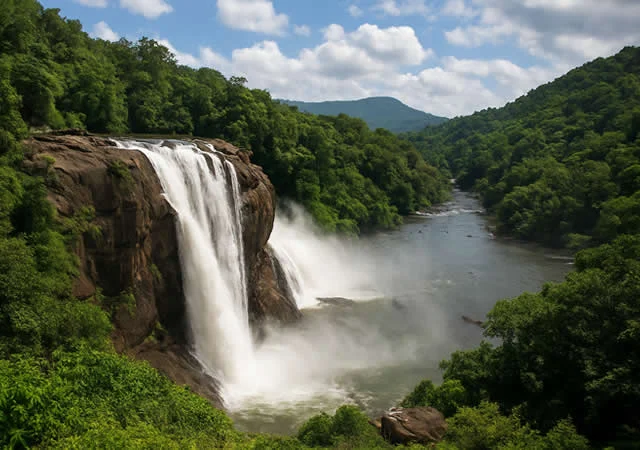
Athirappilly Falls is the kind of place that lives up to its reputation. Located on the Chalakudy River in Thrissur district, this is Kerala’s largest waterfall and one of its most impressive natural attractions. The sight of water cascading down an 80-foot drop across a wide rock face, surrounded by dense evergreen forest, is reason enough for the steady stream of visitors it receives throughout the year.
Nestled deep in the Sholayar ranges of Kerala’s Western Ghats, Athirappilly Falls is a breathtaking spectacle. This powerful cascade, standing around 80 feet tall, pours through dense forest along the Chalakudy River, making it one of the most iconic and visited natural landmarks in Kerala.
Nature lovers, photographers, and road trippers all find something to appreciate here. The falls have featured in numerous Indian films and music videos, which has only added to their fame. But beyond the Instagram appeal, Athirappilly offers a genuine experience of Kerala’s forest landscapes and the raw power of water in motion.
Getting Oriented
Athirappilly Falls is situated in Thrissur district, close to the Sholayar forest range on the western edge of the Western Ghats. It’s conveniently positioned for visitors coming from Kochi, Thrissur, or the nearby town of Chalakudy. The falls mark the point where the Chalakudy River begins its descent from the Anamalai Hills towards the plains, creating the dramatic drop that defines the site.
What Makes Athirappilly Famous
The falls drop approximately 24m (80 feet) in a wide cascade that stretches across the entire breadth of the river during peak flow. The sheer volume of water, combined with the width of the falls, creates a powerful spectacle that sets it apart from other waterfalls in Kerala.
The surrounding area is covered in dense evergreen forest, part of the Sholayar range, which is home to diverse wildlife including elephants, bison, and various bird species. The forest department manages the area, which helps maintain its relatively undisturbed character.
The falls have appeared in several well-known films, including parts of Baahubali and Guru, which has made them familiar even to people who haven’t visited. But the real draw is the setting itself: the combination of water, rock, and forest creates a landscape that feels both dramatic and naturally balanced.
The Viewing Experience
The main viewpoint is located near the entrance and offers a clear view of the entire width of the falls. From here, you can appreciate the scale of the cascade and the way the water fans out across the rock face. The viewpoint is accessible without much walking and is suitable for all age groups, including elderly visitors and families with young children.
The sound of the falls is constant from this point, and the mist often drifts up towards the viewing area, particularly during the monsoon when the water flow is at its peak.
Trek to the Base
For a closer encounter, there’s a path leading down to the base of the waterfall. It’s a short trek, perhaps 15 to 20 minutes depending on your pace, but the path is moderately steep and can be slippery, especially after rain. Proper footwear is essential.
At the base, you’ll feel the full force of the falls. The mist spray is thick, and the sound of water hitting rock is intense. The rocky terrain requires careful footing, but the close-up views make it worthwhile. During the monsoon, access to the base may be restricted for safety reasons, so check before making the trek.
Scenic Surroundings
The area around Athirappilly is lush with forest cover. River pools form upstream from the falls, and natural walking paths wind through the forest near the entrance. The vegetation is thick, with tall trees providing shade and a sense of enclosure.
The waterfall’s character changes with the seasons. During the monsoon (June to September), the flow is powerful and dramatic, with water thundering over the rocks and mist filling the air. Post-monsoon (October to February), the paths become clearer and visibility improves, though the flow remains substantial. By summer (March to May), the water volume reduces noticeably, but the falls remain impressive and the reduced crowds make for a more peaceful visit.
Best Time to Visit
The monsoon months offer the most dramatic visuals. The water flow is at its highest, and the falls are at their most powerful. However, the paths can be slippery, and access to certain areas may be restricted. If you don’t mind getting wet and can handle the steeper, more challenging terrain, this is the time to visit.
Post-monsoon, from October to February, provides the best balance. The water flow is still strong, the weather is comfortable, and the paths are safer. This period is ideal for photography and sightseeing without the intensity of the monsoon rains.
Summer months see reduced water flow, but the falls are still worth visiting. The crowds thin out, and the cooler forest environment provides relief from the heat of the plains. Early mornings and late afternoons are the best times during this season.
Things to Do
- Enjoy the viewpoints and photography angles. The main viewpoint and the base offer different perspectives, and both are worth exploring. The changing light throughout the day creates varied conditions for photography.
- Walk through forest paths near the entrance. There are short trails that allow you to explore the surrounding forest. They’re not long or challenging, but they give you a sense of the ecosystem that supports the falls.
- Visit nearby Vazhachal Falls and Charpa Falls. Both are located along the same route, a few kilometres from Athirappilly. Vazhachal is smaller but equally scenic, and Charpa is more secluded and requires a short walk through the forest.
- Observe birdlife and occasional wildlife. The area is rich in bird species, and patient observers might spot hornbills, kingfishers, and various other birds. Larger wildlife like elephants are present in the forest but sightings near the falls are rare. If you do see wildlife, maintain a safe distance and avoid disturbing them.
- Take short breaks at tea shops and local snack stalls. There are small eateries near the entrance serving tea, coffee, and simple snacks. They’re basic but convenient, particularly after a trek to the base.
Facilities for Visitors
There’s a ticketed entry point managed by the forest department, with a checkpost where vehicles are briefly checked. Entry fees are modest, with separate rates for adults, children, and vehicle parking.
Designated parking areas are available, though they can fill up quickly on weekends and holidays. Arrive early if you’re visiting during peak times.
Basic amenities include washrooms near the entrance, small eateries, and souvenir stalls selling handicrafts, spices, and local products. The facilities are functional rather than elaborate, but they cover the essentials.
Lifeguards are present during peak seasons, and safety signboards are placed at key points around the viewing areas and paths. The forest department takes safety seriously, particularly during the monsoon when conditions can be hazardous.
How to Reach
Athirappilly is well-connected by road and is accessible via a scenic route through the forest from Chalakudy town. The road is in good condition, and the journey itself is pleasant, with forest views along the way.
Regular buses run from Chalakudy to Athirappilly, and taxis and auto-rickshaws are available for hire. If you’re driving, the route is straightforward with clear signboards.
From Major Cities
Athirappilly is approximately 70km (43 miles) from Kochi, around 55km (34 miles) from Thrissur, and about 32km (20 miles) from Chalakudy railway station. The nearest airport is Cochin International Airport, roughly 55km (34 miles) away. From the airport or railway station, you can hire a taxi or take a bus to Chalakudy and then proceed to Athirappilly.
The journey from Kochi takes about 1.5 to 2 hours depending on traffic, while from Thrissur it’s about an hour.
Nearby Attractions
- Vazhachal Waterfalls is located around 5km (3 miles) from Athirappilly. It’s smaller but set in equally beautiful surroundings, with rippling cascades and forest trails.
- Charpa Falls is further along the same route, about 7km (4 miles) from Athirappilly. It requires a short walk through the forest and is less visited, making it a good option if you prefer quieter settings.
- Athirappilly–Vazhachal Scenic Drive is worth taking slowly. The road winds through the forest with views of the river and occasional wildlife crossings.
- Thumboormuzhi Hanging Bridge and Butterfly Garden is about 10km (6 miles) away. The hanging bridge offers views over the Chalakudy River, and the butterfly garden is a pleasant stop, particularly for families.
- Rainforest resorts and eco-lodges are scattered around the area. Many offer forest-facing rooms and guided nature walks, making them ideal if you want to spend more time exploring the region.
Safety & Traveller Tips
- Wear good footwear. The paths can be slippery, particularly near the water and during or after rain. Sandals or flip-flops are not advisable for the trek to the base.
- Avoid going too close to the water, especially during monsoon. The current is strong, and the rocks can be slippery. Every year, there are incidents involving visitors who underestimate the conditions.
- Carry drinking water and sun protection. While the forest provides shade, the open areas near the falls can be exposed. Hydration is important, particularly if you’re trekking down to the base.
- Weekends attract heavy crowds. If possible, plan your visit for a weekday or aim to arrive early in the morning before the tour groups and larger crowds show up.
- Respect forest rules and stay on marked paths. The area is part of a protected forest, and straying from designated paths can disturb wildlife and vegetation. Follow the instructions on signboards and listen to forest department staff.
Responsible Travel
Athirappilly’s beauty depends on visitors treating it with care. Do not litter; carry your waste out with you and use the bins provided near the entrance. Plastic waste is a particular problem, so avoid bringing single-use plastics if possible.
Do not play loud music or create unnecessary noise. The natural ambience is part of what makes the experience worthwhile, and loud sounds can disturb both wildlife and other visitors.
Support local vendors and eco-friendly businesses. The tea stalls, snack vendors, and handicraft sellers near the entrance depend on tourism for their livelihoods. Buying from them helps ensure that local communities benefit from the presence of the falls.
A Must-Visit Natural Wonder
Athirappilly Falls is one of those places that justifies the journey. It showcases Kerala’s natural beauty in a way that feels both powerful and accessible, offering something for casual visitors and dedicated nature enthusiasts alike.
Explore it along with nearby waterfalls like Vazhachal and Charpa for a complete experience, or simply spend a few hours here soaking in the sights and sounds. Either way, it’s a destination that stays with you long after you’ve left.