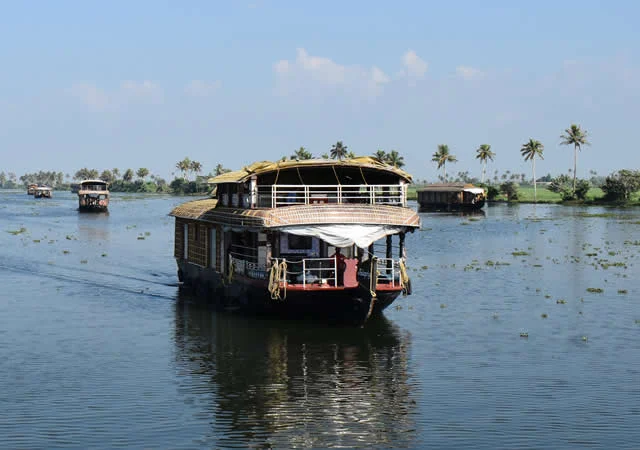
Alleppey, officially known as Alappuzha, is where Kerala’s backwater tourism truly comes alive. This coastal town in central Kerala has earned its reputation as one of the state’s most iconic destinations, thanks to its tranquil network of waterways, traditional houseboats, and glimpses into authentic village life along the canals.
Traditional teak houseboats (kettuvallams) drift gently across palm-fringed canals, mirror-like lagoons, and verdant paddy fields offering a serene escape into Kerala’s waterbound heart.
Often called the “Venice of the East,” Alleppey sits at the centre of Kerala’s backwater system, a vast network of rivers, canals, lagoons, and lakes that define the region’s landscape and way of life. For many visitors, a houseboat cruise through these waters is the defining Kerala experience, offering a slow-paced journey through paddy fields, coconut groves, and villages where life unfolds at the water’s edge.
Understanding Alleppey
Alleppey is a coastal town situated along the Arabian Sea in central Kerala. It’s well-connected to major cities like Kochi, about 53km (33 miles) to the north, and Kottayam, roughly 32km (20 miles) to the east. The town serves as the gateway to the Kuttanad region, often called the “Rice Bowl of Kerala,” and sits on the shores of Vembanad Lake, Kerala’s longest lake.
What Makes Alleppey Special
The defining feature of Alleppey is its intricate network of waterways. Rivers, canals, lagoons, and lakes crisscross the landscape, creating a unique ecosystem where water and land exist in close balance. This network has shaped everything from local architecture to agriculture and transportation.
Things to Do
Traditional houseboats, known as kettuvallams, are perhaps Alleppey’s most recognisable feature. Originally used for transporting rice and spices, these boats have been converted into floating accommodations, offering overnight cruises through the backwaters. They’re constructed without nails, held together by coir ropes, and fitted with thatched roofs and modern amenities.
Beyond the houseboats, Alleppey offers an authentic glimpse into backwater village life. Here, people fish from canoes, wash clothes on canal banks, and travel by boat as naturally as others might take a bus. The pace is unhurried, and the connection to water is woven into every aspect of daily existence.
Houseboat Cruise
Once used to transport rice and spices, these classic barges have been reimagined as floating retreats, complete with cozy bedrooms, decks to watch sunsets, and homemade Kerala fare prepared right onboard.
A houseboat cruise is the quintessential Alleppey experience. You have two main options: day cruises that last a few hours or overnight stays where you spend the night aboard while anchored in a quiet stretch of water.
Day cruises typically cover sections of Vembanad Lake and the narrower canals of the Kuttanad region. You’ll pass through villages, paddy fields, and coconut plantations, with occasional stops at small temples or local toddy shops. The pace is deliberately slow, designed for watching life unfold along the banks rather than ticking off sights.
Overnight stays offer a more immersive experience. You board around noon, cruise through the afternoon, anchor for the night in a peaceful spot, and disembark the following morning. Meals are prepared onboard by the crew, usually featuring fresh Kerala seafood, rice, and traditional dishes. The experience is about disconnecting; there’s no rushing, no schedule beyond meal times, just the gentle rhythm of water and quiet observation.
Shikara Rides
If a full houseboat experience isn’t feasible, shikara rides offer a shorter alternative. These are smaller, covered boats that take you through the narrower canals for a couple of hours. They’re more affordable and ideal for travellers with limited time or those travelling solo or in small groups.
Shikara rides provide an intimate perspective on the backwaters, as the smaller boats can access narrower channels that larger houseboats cannot. You’ll pass closer to village homes, see children playing by the water, and have more direct interactions with local life.
Explore Kuttanad
The Kuttanad region, accessible from Alleppey, is remarkable for its geography. Much of the area lies below sea level, with farming done in fields reclaimed from the lake. The paddy fields here are separated from the water by a system of bunds and canals, creating a unique agricultural landscape.
Visiting Kuttanad means seeing traditional farming methods still in use, village life that revolves around the water, and toddy shops where locals gather in the evenings. Toddy, the mildly alcoholic sap of coconut palms, is a local staple, and trying it at a village shop offers a taste of everyday life here.
Alleppey Beach
Alleppey Beach stretches along the Arabian Sea and offers a different side of the town. The golden sand beach is backed by a historic pier that extends into the sea, a popular spot for watching sunsets. The beach itself is clean and suitable for leisurely walks, though swimming requires caution due to currents.
Early mornings and late afternoons are the best times to visit. The light is beautiful for photography, and the temperature is more comfortable than midday. There are a few small eateries near the beach serving snacks and tea.
Cultural Experiences
Alleppey’s local markets are worth exploring. The town has a thriving coir industry, and you’ll see coir products being made and sold throughout the area. The markets also offer spices, fresh fish, and local produce.
Temple festivals occur throughout the year, with the most famous being the Nehru Trophy Boat Race held in August. This is a major event featuring traditional snake boats (chundan vallams) raced by teams of rowers, drawing large crowds from across Kerala.
The food scene in Alleppey centres on seafood and traditional Kerala meals. Fresh fish, prawns, crab, and mussels are prepared in various styles, often with coconut, tamarind, and local spices. Kerala meals served on banana leaves are available at small eateries, offering a complete taste of local cuisine.
Best Time to Visit
November to February is the peak season and offers the most pleasant weather. Temperatures are comfortable, humidity is lower, and the conditions are ideal for cruising and sightseeing. This is also the busiest period, so advance booking for houseboats is essential.
The monsoon months, from June to September, bring a different character to the backwaters. The landscape turns intensely green, the water levels rise, and the atmosphere becomes more tranquil as tourist numbers drop. If you don’t mind occasional rain and prefer a quieter experience, this can be an excellent time to visit. The rain also cools things down, making the humidity more bearable.
Summer, from March to May, is hot and humid. Temperatures can climb into the mid-30s Celsius (mid-90s Fahrenheit), and the humidity makes it feel hotter. If you’re visiting during this period, plan activities for early mornings and late evenings. Non-air-conditioned houseboats can become uncomfortable during afternoon hours.
How to Reach
Alleppey is well-connected by road to major Kerala towns and cities. It’s about 53km (33 miles) from Kochi, 32km (20 miles) from Kottayam, and 87km (54 miles) from Kollam. State-run buses and private buses operate regular services, and taxis are readily available. If you’re driving, the roads are in good condition and well-signposted.
Alappuzha Railway Station is on the main line connecting Thiruvananthapuram and other southern cities with northern Kerala. Frequent trains stop here, making it convenient for rail travel. The station is centrally located, and auto-rickshaws and taxis are available outside for onward travel.
The nearest airport is Cochin International Airport, approximately 85km (53 miles) from Alleppey. From the airport, you can hire a taxi or take a bus to Alleppey. The journey takes about 1.5 to 2 hours depending on traffic.
Popular Routes & Itineraries
- Half-day shikara ride covers narrow canals and village stretches, usually lasting 2 to 3 hours. This is ideal if you’re short on time or want a taste of the backwaters without committing to a full houseboat experience.
- One-night houseboat cruise is the most popular option. You board around noon, cruise through Vembanad Lake and parts of Kuttanad, anchor for the night, and disembark the next morning around 9am. This gives you enough time to experience sunrise and sunset on the water.
- Two-day backwater circuit includes Kumarakom and covers a wider area. This option allows for more exploration and a deeper immersion into backwater life, with stops at villages and small islands along the way.
Traveller Tips
- Book houseboats through trusted operators. Check reviews, confirm cleanliness standards, and ask about safety measures and crew experience. Not all houseboats are created equal, and choosing a reputable operator makes a significant difference to your experience.
- Carry essentials: sun protection (hat, sunglasses, sunscreen), light cotton clothing, and insect repellent. Mosquitoes can be active during evenings and early mornings, particularly near the water.
- Avoid plastic bottles. Use refillable water bottles when possible. Many houseboats now provide filtered water, reducing the need for single-use plastics.
- Confirm check-in and check-out times. Standard timings are usually noon check-in and 9am check-out, but these can vary. Clarify meal arrangements, particularly if you have dietary restrictions.
- Non-AC boats may get warm during afternoons. If you’re travelling in summer or are sensitive to heat, consider an air-conditioned houseboat or ensure there’s adequate ventilation in the sleeping area.
Nearby Attractions
- Kumarakom Backwaters is about 32km (20 miles) from Alleppey and offers similar experiences with its own character. It’s quieter and known for the Kumarakom Bird Sanctuary.
- Pathiramanal Island is a small island in Vembanad Lake, accessible by boat. It’s a peaceful spot for birdwatching and short walks.
- Marari Beach is approximately 11km (7 miles) from Alleppey, a quieter alternative to Alleppey Beach with a fishing village atmosphere.
- Ambalappuzha Sri Krishna Temple is around 14km (9 miles) away, famous for its palpayasam (sweet rice pudding) offered as prasadam.
- Krishnapuram Palace is about 47km (29 miles) from Alleppey and features traditional Kerala architecture and a notable mural depicting the Gajendra Moksham story.
Responsible Travel
The backwaters are a fragile ecosystem, and responsible behaviour helps preserve them. Respect the quiet nature of the villages; avoid playing loud music that disturbs residents and wildlife.
Dispose of waste properly. Many houseboats now have waste management systems, but not all. Ensure your operator treats waste responsibly, and don’t throw anything into the water.
Support local communities by purchasing from coir workers, eating at small family-run eateries, and engaging respectfully with fishermen and farmers you meet along the way. Tourism is a significant income source for many families here, and your choices can directly benefit them.
Choose eco-friendly houseboats when possible. Some operators have adopted solar power, proper waste treatment, and sustainable practices. Supporting these businesses encourages others to follow suit.
A Place for Slow Travel
Alleppey is best experienced without hurry. The backwaters invite you to slow down, to watch the light change on the water, to observe how people live in harmony with their environment, and to let go of the usual need to see and do as much as possible.
Experience both the houseboat journey and the everyday life of the backwater villages. Spend time on the water, but also walk through the villages, visit the markets, and engage with the people who call this place home. That combination offers the fullest sense of what makes Alleppey special and why it remains at the heart of Kerala’s backwater experience.