Kerala Pages · Food & culture
A cylinder of puttu slips from its steamer, pale rice flour striped with grated coconut. Break into it and the shape collapses into soft crumbs. Add a spoonful of dark chickpea curry, and breakfast begins to make sense.
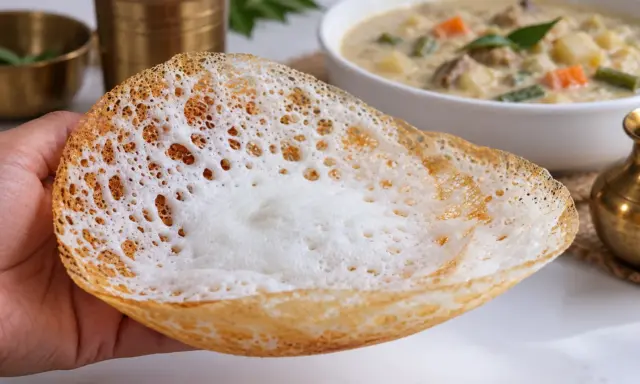
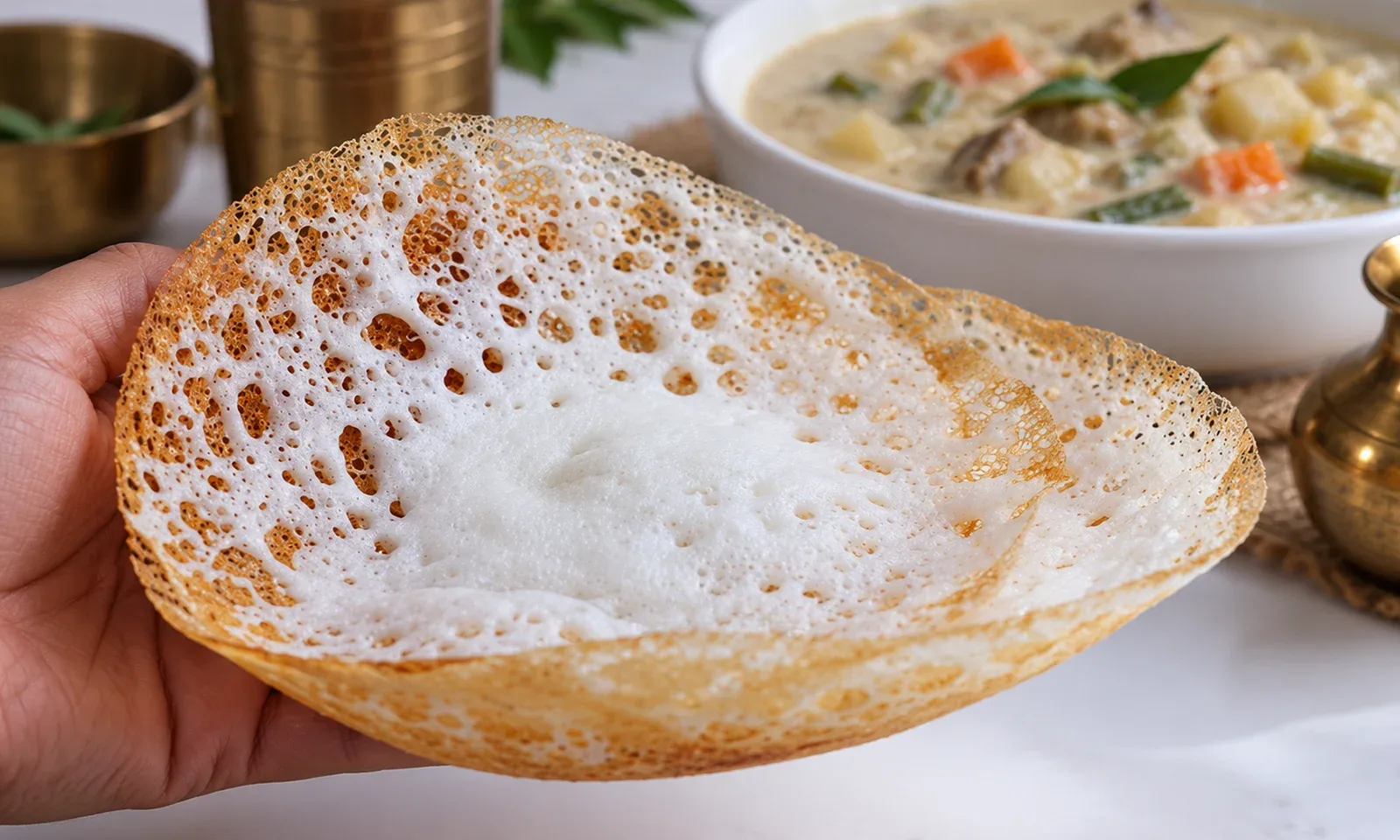
Across the stove, an appam cooks beneath a lid. Its centre stays soft and spongy while the thin rim turns crisp. That centre wants gravy. The edge deserves a bite while it still cracks.
Kerala breakfasts are often best understood in pairs: puttu and kadala curry, appam and stew, idiyappam and coconut milk. Menus vary across regions and kitchens, but a few familiar combinations will help you order well.
Puttu and kadala curry
Soft crumbs · bold curry
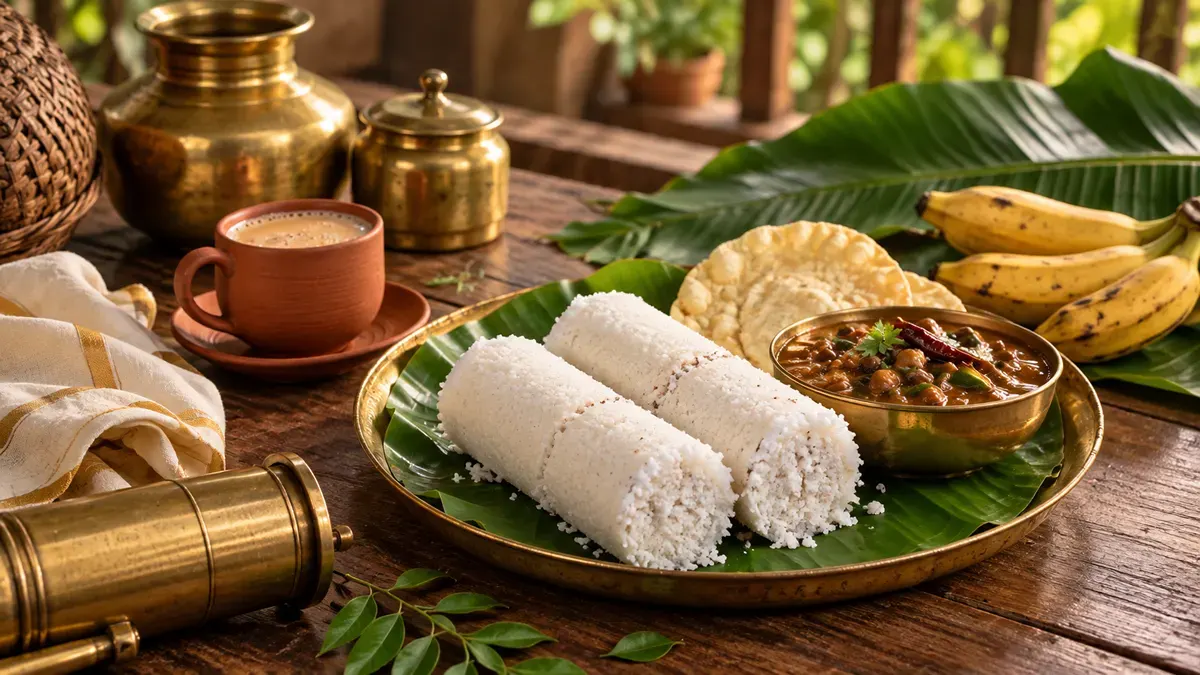
Puttu is moistened rice flour layered with grated coconut and steamed, often in a cylindrical mould. It holds its shape on the plate, then crumbles beneath a spoon or your fingers.
The flavour is gentle—rice, coconut, a little salt. The accompaniment supplies moisture and depth.
Kadala curry, made with black chickpeas, is a classic partner. The chickpeas keep some bite; the gravy brings spice. Some cooks build it around roasted coconut, others around onion, tomato and their own blend of seasonings. Thickness and chilli heat vary.
Break off a little puttu and mix in enough curry to moisten the crumbs. Adjust as you go.
Ripe banana offers another way to eat it. Mash a piece into the puttu for a sweet mouthful, or alternate it with the curry. A pappadam, where offered, adds crunch.
Appam and stew
Lacy edges · coconut gravy
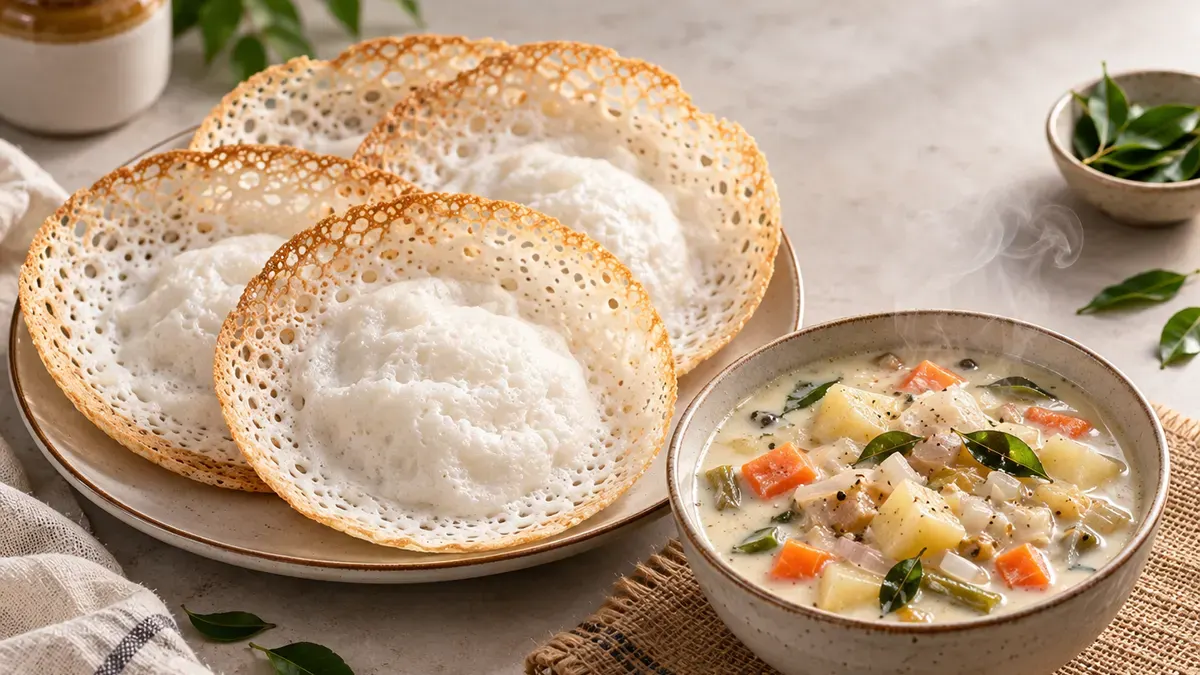
Appam offers two textures in one pancake: a thick, spongy centre and a delicate, lacy rim.
To make it, the cook swirls fermented batter around a curved pan. A thin coating clings to the sides while the rest gathers in the middle. Rice and coconut commonly form the base; recipes and fermentation methods differ.
Stew, often called ishtu, suits appam beautifully. Coconut milk carries the flavour of ginger, curry leaves and whole spices. Vegetable versions may include potatoes, carrots, beans or peas; chicken and mutton are common alternatives.
Do not judge the heat by the colour. A pale stew can still pack a peppery or green-chilli kick.
Taste a piece of appam’s fresh edge before dipping it. Then let the soft centre soak up the gravy.
Idiyappam and curry
Tender nests · your choice of pairing
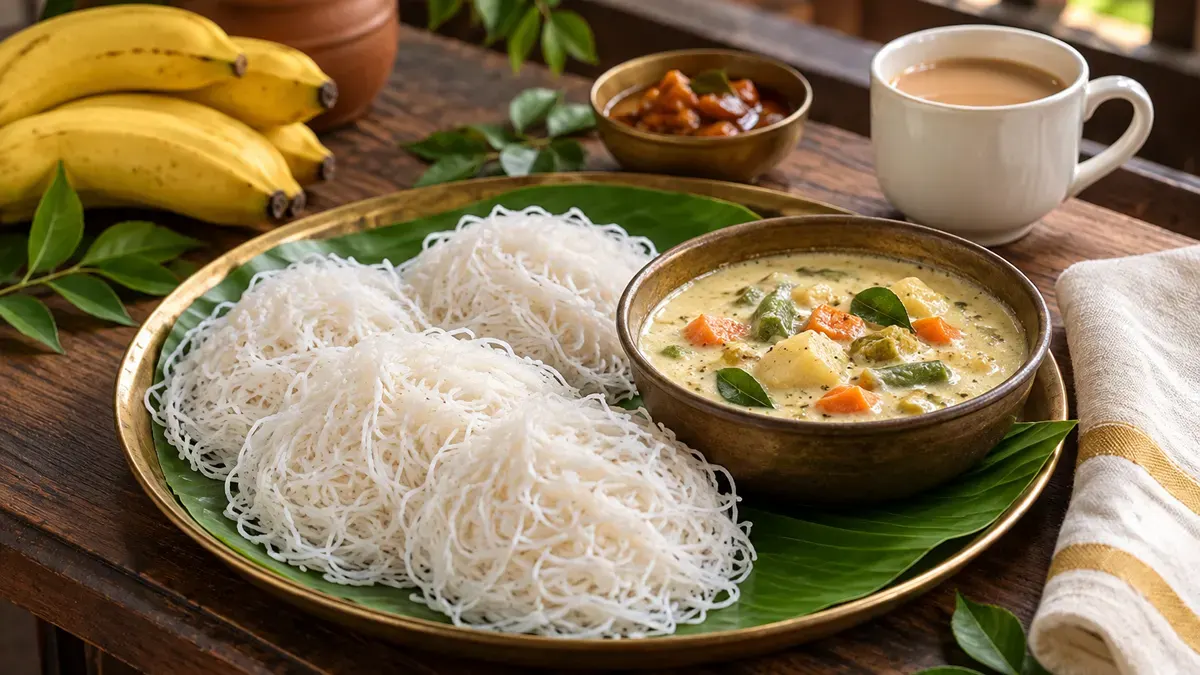
Idiyappam arrives in small nests of fine, steamed rice noodles. The strands are tender and mild, sometimes scattered with grated coconut.
Pull a nest apart and gravy slips into the gaps. Vegetable or chicken stew makes a gentle pairing; egg curry brings a more assertive sauce.
You may also find egg roast. Despite the name, this commonly means boiled eggs coated in a concentrated onion masala. It can be delicious with idiyappam, but ask about gravy if you want a wetter accompaniment.
For a sweeter breakfast, look for coconut milk, sometimes sweetened and scented with cardamom. Add it gradually so the strands soften without losing all their texture.
Dosa and idli
Griddled or steamed · South Indian favourites
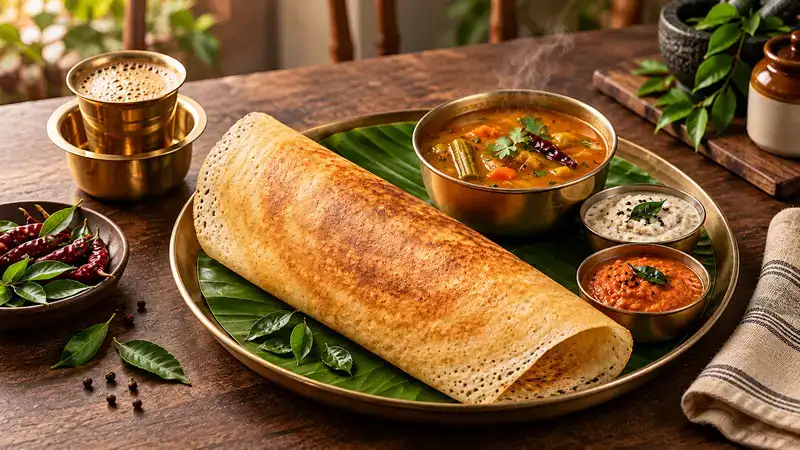
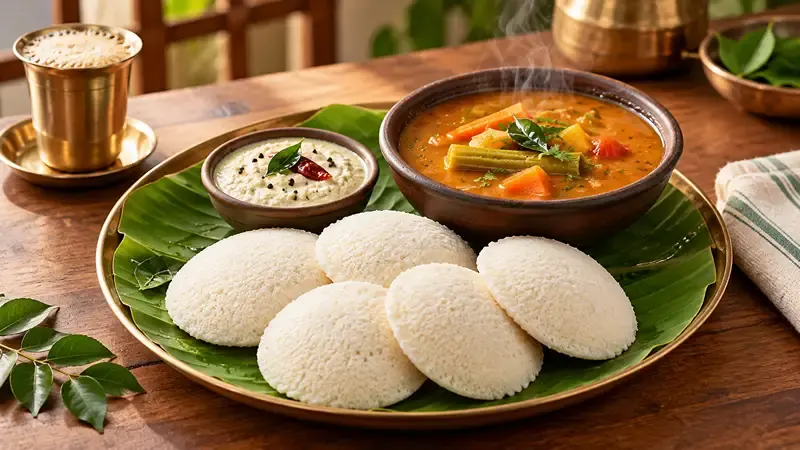
Dosa and idli belong to a wider South Indian breakfast tradition and are firmly at home in Kerala.
Their usual starting point is fermented rice-and-urad-dal batter. From there, they take different paths: dosa spreads across a hot griddle; idli steams in moulds.
Choose dosa for browned flavour and, in thinner versions, crispness. A plain dosa keeps the focus on the batter and accompaniments. Masala dosa adds a seasoned potato filling for a more substantial meal.
Idli is soft and porous, ready to absorb sambar by the spoonful.
Both commonly come with sambar—a tangy lentil-and-vegetable preparation—and chutneys. Coconut is a familiar choice; other chutneys depend on the kitchen.
Pathiri and curry
Soft rice flatbread · a taste of Malabar
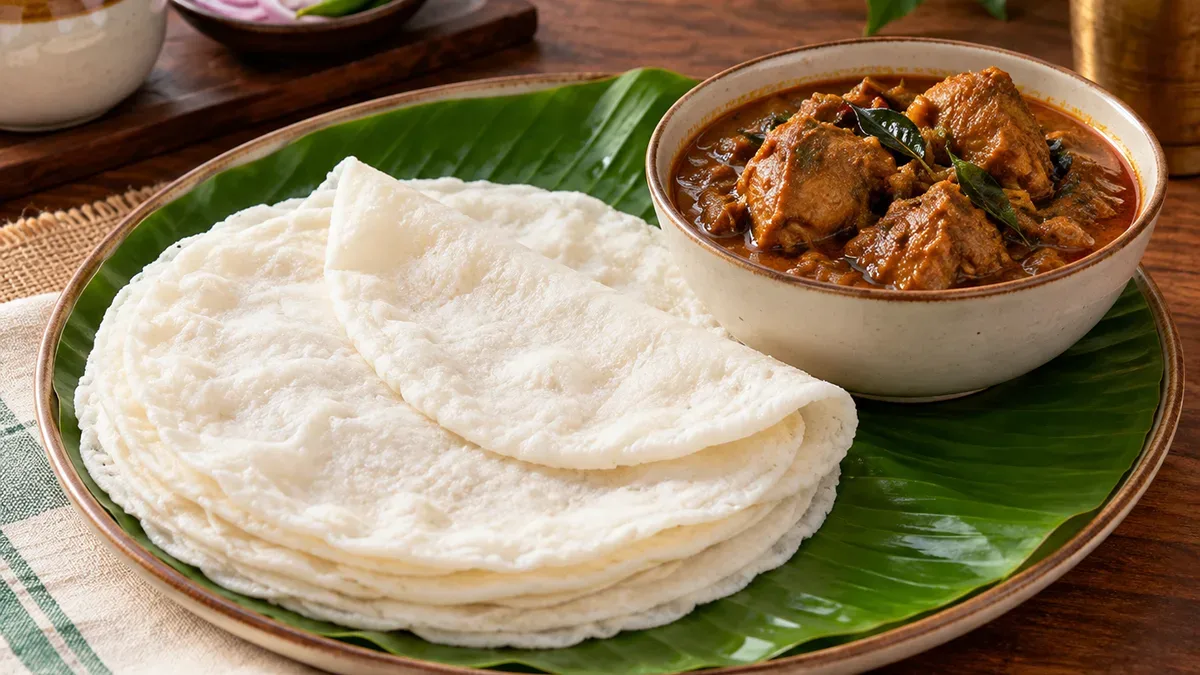
Plain rice pathiri is a thin, soft flatbread cooked on a hot griddle. Its mild flavour leaves room for the curry beside it.
Closely associated with Malabar in northern Kerala, including Mappila Muslim food traditions, pathiri appears in several forms. Filled, fried and layered preparations can differ considerably from the plain rice flatbread.
Look for it at Malabar restaurants, particularly in the north. It may be served at breakfast or at other meals, so check availability before planning your morning around it.
Chicken curry is a familiar partner; fish and other meat curries also appear. Vegetable accompaniments depend on the establishment.
Choose your breakfast at a glance
| Dish | Texture | Start with |
|---|---|---|
| Puttu | Soft, crumbly, coconut-flecked | Kadala curry; ripe banana alongside |
| Appam | Spongy centre, crisp lacy rim | Vegetable or chicken stew |
| Idiyappam | Fine, tender noodle strands | Egg curry, stew or sweetened coconut milk |
| Dosa | Crisp to soft, depending on the style | Sambar and chutneys |
| Idli | Soft, porous steamed cakes | Sambar and coconut chutney |
| Plain rice pathiri | Thin, soft flatbread | Chicken curry or an available vegetable curry |
For dietary requirements, check the whole order: the main dish, curry, chutneys and cooking fat. Vegetarian dishes may contain dairy, and egg dishes need a separate check. If you are vegan, name the ingredients you avoid.
For coeliac disease or food allergies, ask specifically about ingredients and shared equipment. A rice-based dish alone does not establish suitability.
Tea or coffee
Chaya means tea; kaapi means coffee. Either can accompany breakfast.
Milk tea often arrives sweet. If you prefer less sugar—or none—say so when ordering. Kattan chaya is tea without milk, but it may still be sweetened.
For coffee, ask whether filter or instant is available if you have a preference. Mention milk and sugar at the same time.
Where to eat
A chaya kada
A tea shop may serve snacks and a short breakfast menu; some concentrate on drinks and small bites. Ask what is ready.
A neighbourhood “hotel”
On a Kerala signboard, “hotel” may mean a restaurant with no accommodation. These establishments often offer a fuller breakfast menu and several curries.
A hotel or resort buffet
A spread lets you sample several dishes. Look for freshly replenished trays or food cooked to order: appam edges and dosa crispness fade as they wait.
How to order
A few questions do most of the work:
- “What is ready now?” Some menu items may be served only at certain times.
- “What comes with it?” Check whether curry and other accompaniments are included.
- “How many pieces are in a portion?” Sizes vary, especially when ordering several dishes.
- “Which curry is less hot?” Staff can guide you towards an available option; a prepared curry may be difficult to adjust.
- “Can I order another piece afterwards?” Start with one portion and add more if you want it.
Eat with your right hand if comfortable, or ask for cutlery. Either way, the pleasure lies in finding the balance of bread, rice or noodles and accompaniment that suits you.
Your first morning
For your first morning, try puttu with kadala curry and a ripe banana. Mix curry into a few warm crumbs, then try the next mouthful with banana. Earthy and spiced; soft and sweet. One dish, two breakfasts.
Find your next food stop
Explore Kerala’s restaurant and food spot listings.