Kerala’s food is more than just nourishment. It is history, climate, culture and celebration all served on a banana leaf. Whether you live here or you’re visiting from abroad, the cuisine of Kerala is a journey through coconut groves, spice markets, coastal waves and traditional homes.
Visiting Kerala isn’t complete without tasting it, bite by bite, dish by dish, you discover the story of this place.
From humble breakfasts to grand festival feasts, Kerala offers something to delight every taste.
What makes Kerala’s Cuisine Unique
At the heart of Kerala food are a few guiding elements that give it its distinct character:
- Coconut in many forms: fresh, grated, as milk, oil or even as flavouring in sweets. It’s everywhere, giving dishes a rich, creamy or subtly sweet touch.
- Fresh seafood and fish: with so much coastline, sea-catches define much of the non-vegetarian repertoire. Curries, fries, ‘pollichathu’ (wrapped in banana leaves), all show how fish, prawns and other seafood are central.
- Rice & tubers as staples: steamed rice, puttu, pathiri, tapioca and banana accompany most meals.
- Balance of flavours: spicy, sour, sweet, creamy: Kerala’s food often weaves all these together. Tamarind or raw mango for sour, jaggery or coconut-sweetness, fiery chillies, soothing coconut milk.
- Vegetarian feasts & festival foods: like the Sadya, a grand spread of many dishes, each with its own texture and flavour, served on banana leaf, typically during Onam and other special days.
Kerala’s cuisine is unique due to its abundant use of coconut, aromatic spices, and fresh seafood. Kerala cuisine is a rich, diverse blend of indigenous flavors and international influences, with distinct culinary traditions from different communities.
Must-try Dishes: From Sunrise to Festival Nights
Here are some of the iconic dishes & food experiences you should sample when in Kerala.
- Puttu & Kadala Curry: Steamed cylinders of rice cake (puttu) layered with grated coconut, paired with a spicy chickpea curry (kadala). A breakfast staple.
- Appam with Stew / Ishtu: Lacy, bowl-shaped rice pancakes (appam), soft in the middle, crispy at edges, served with a mild, creamy coconut-based vegetable or meat stew.
- Fish Curry & Fish Molly: Fresh fish in tangy, spicy, coconut-y gravy. Fish Molly is a lighter, milder version. Great with rice or pathiri.
- Malabar Biryani: Especially in northern Kerala, biryanis with fragrant rice, spices, meat or fish, influenced by historical trade and migratory cultures.
- Karimeen Pollichathu: Pearl spot fish marinated, wrapped in banana leaf and grilled or baked; smoky, spicy, flavourful.
- Sadya & Payasam: The grand vegetarian banquet. Sadya involves many side dishes (avial, erissery, thoran, etc.), chutneys, pickles; ended with sweets like payasam (rice or ada-based pudding with milk/coconut, jaggery or sugar).
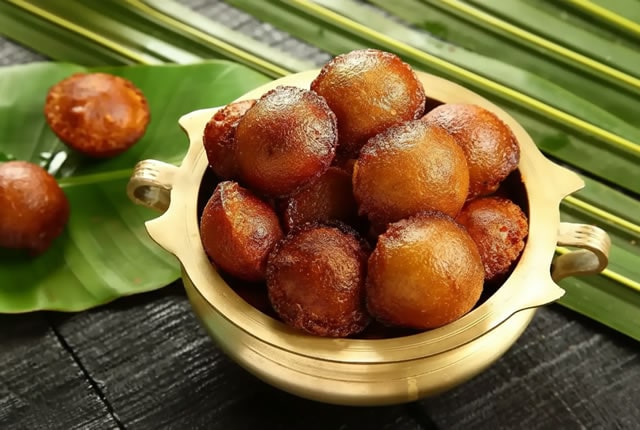
- Snacks & Desserts: Pazham Pori (banana fritters), Unniyappam (rice-sweet fritters), Ada Pradhaman, and traditional sweets from Kozhikode like halwa. Tasty treats especially in the evenings or during festivals.
Regional and Cultural Variations
Many curries, especially fish curries, are traditionally slow-cooked in earthenware pots called manchatti, which enhances the flavor and retains moisture.
Kerala is not uniform. The cuisine changes noticeably from north to south, along the coast and in the hills, among communities:
- Malabar Region (North Kerala): More influence from Arab trade, use of spices, biryani traditions, meat/fish curried in bold ways.
- Travancore & Central Kerala: Softer flavours, more emphasis on vegetarian dishes in many households, lots of coconut-based gravies, sweet puddings and festival meals.
- Coastal vs Inland: By the sea, seafood dominates; inland, more root vegetables, banana, yam, tubers, and more vegetarian diversity. Also taste and spice levels vary.
- Community-based kitchens: Syrian Christians, Muslims, Hindus, tribal communities each have their own iconic dishes, their methods, their specialities (for instance, meat and fish dishes, different sweets, feast traditions).
Tips for tasting Kerala like a Local
- Eat seasonally
Many vegetables, fruits and seafood are at their best in certain months. For example, fresh jackfruit, mango, or tender coconut flavours shine in season. - Try street food & local messes
Simple eateries and food stalls often offer the most authentic flavours at lower cost. - Respect local dining traditions
Meals like Sadya are eaten sitting on the floor sometimes, using hands, on banana leaves. Receiving & giving food generously, sharing is part of the experience. - Mind spice levels
If you are not used to high spice, ask for milder versions. Kerala cooks are usually flexible. - Include vegetarian days
Some days or regions have predominantly vegetarian menus; part of the joy is discovering the wide variety even without meat.
Why Kerala Food Speaks to Everyone
For international travellers, Kerala cuisine is an accessible adventure: tropical flavours, bold spices, fresh seafood, unique sweets and banquet-style meals. It offers a way to understand the land’s seasons, its people’s rituals and its deep connections to nature.
For locals, it’s a pride, a comfort, and a canvas of home. Every region has its specialties. Every festival has its dishes. And every generation carries recipes that tell of past flourishes: spice trade, migration, change of taste yet constant love for coconut, rice, fish and flavour.